
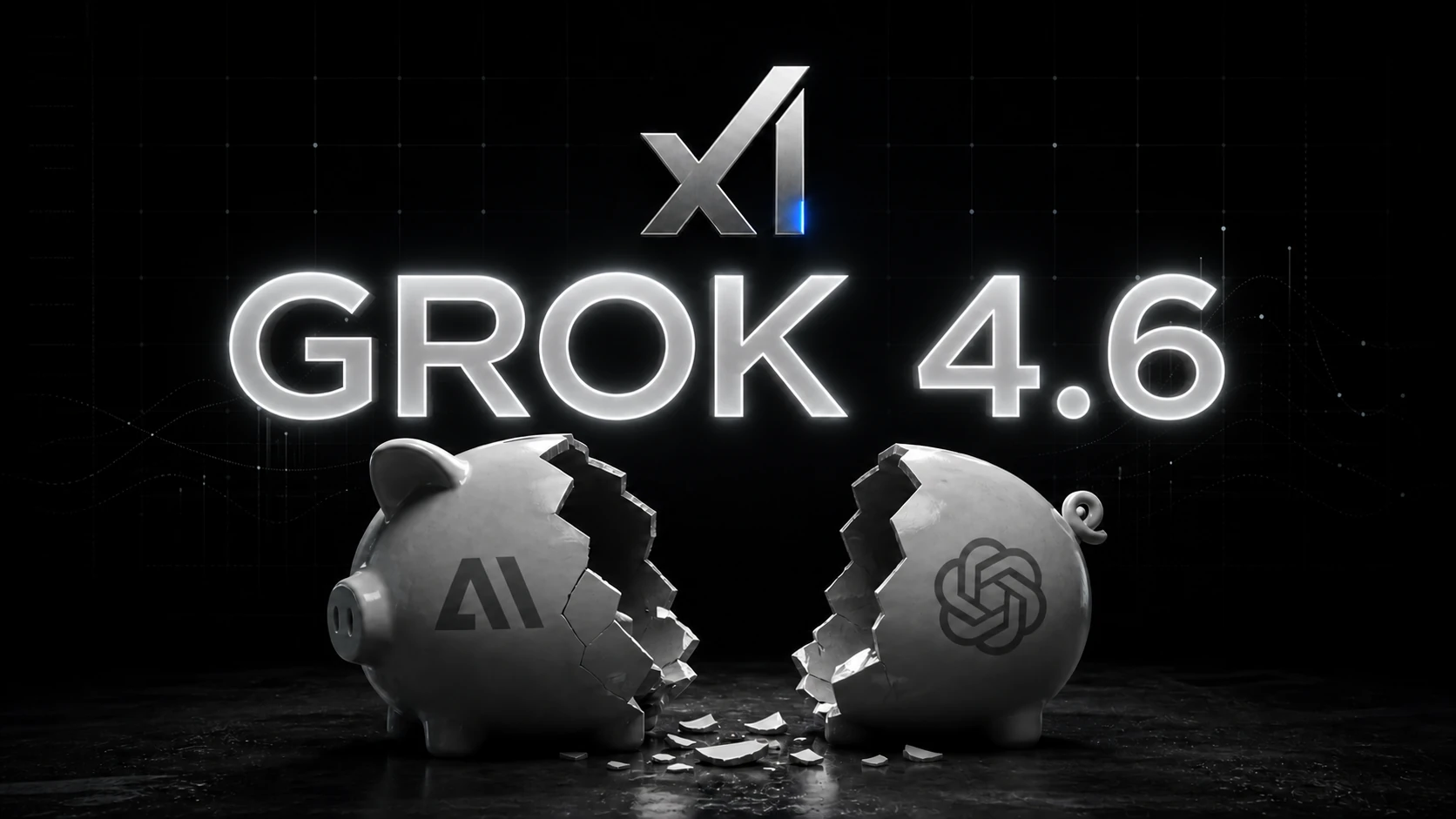
Leaderboards move quickly. Bills do not. Grok 4.6 combines frontier-level reasoning, strong throughput and pricing at $2 per million input tokens and $6 per million output tokens. At comparable quality, that calls for a fresh evaluation.
It is a knockout because Grok 4.6 combines the capability of an excellent American frontier model with the price of a Chinese model.
Performance per dollar is getting hard to ignore
Grok 4.6 High scores 61 on the Artificial Analysis Intelligence Index, level with GPT-5.6 Sol Max and one point behind Fable 5 Max. xAI’s own results add nuance. Grok leads on GDPVal and CursorBench, trails on DeepSWE, and remains close on FrontierCode and APEX Agents.
| Model | Positioning | Context | Input / 1M | Output / 1M |
|---|---|---|---|---|
| Grok 4.6 | Frontier | 500K | $2 | $6 |
| GPT-5.6 Sol | Flagship | 1.05M | $5 | $30 |
| Claude Fable 5 | Frontier | 1M | $10 | $50 |
| Qwen3.8-Max | Open-weight flagship | 1M | $2 | $6 |
| Kimi K3 | Open-weight flagship | 1M | $3 | $15 |
GPT-5.6 Sol output is five times more expensive; Fable 5 is 8.3 times more expensive. Grok matches the announced launch price of Qwen3.8-Max, while Kimi K3 charges $15 for output, two and a half times the Grok 4.6 rate. A benchmark does not guarantee performance on your repository, but that gap easily justifies an internal trial.
The real paradigm shift comes from attacking the top tier
The target segment is what makes this different from a conventional price cut. OpenAI recently reduced Luna pricing by 80%, a significant move for high-volume workloads. Yet OpenAI still positions Luna as its fastest and most affordable tier. Grok 4.6 instead applies economy-model pricing to a model designed to challenge GPT-5.6 Sol and Fable 5 at the top of the market.
At $6 per million output tokens, xAI is no longer asking developers to choose between the best model and the affordable model. It is trying to erase that separation.
That can reshape model routing. Until now, a team could accept premium pricing for its hardest tasks, then send volume to a lighter or Chinese model. If one model provides near-frontier quality, higher throughput and a much lower bill, that economic architecture becomes less obvious. Token price alone is not enough. Steps, retries and success rate still determine cost per completed task. My field test points in the same direction, however, with a usable first generation and little repair work.
The comparison with Chinese models makes the strategy even more aggressive. Grok meets Qwen3.8-Max at $2 input and $6 output, then undercuts Kimi K3 at its official $3 and $15 rates. Grok 4.6 keeps a shorter context window, but xAI is no longer only challenging Anthropic and OpenAI. It is directly attacking the price-performance territory that made Chinese labs so attractive.
For some Western organizations, this positioning may decide the trade-off. When quality and cost are comparable, procurement familiarity, governance, data policy or a preference for a US vendor can break the tie. This will not be automatic or universal, but xAI removes a major obstacle. Staying with a top US model no longer necessarily requires paying a large premium.
I see a deliberately aggressive acquisition strategy. xAI is attacking everyone at once. It targets Western premium models on price, Qwen at the same price point, and Kimi on its historical value proposition. Developers frustrated by premium prices, quotas or availability swings now have a credible exit.
In my view, the goal is to make Grok the rational choice and eventually the default choice in the West. If xAI sustains quality, capacity and pricing, it may capture users who no longer want to choose between Claude or OpenAI capability and Chinese-model economics.
My usual test with a complete landing page
I reused a demanding one-pass prompt. It asked for a premium guesthouse landing page in vanilla HTML, CSS and JavaScript, including booking, rooms, gallery, dialogs, accessibility, responsive behavior and image generation. The target was a coherent small product, not a pretty isolated screenshot.
Tu es un agent de développement front-end senior.

Objectif :
Créer une landing page moderne, responsive et premium pour une maison d’hôtes / location de vacances, avec un module de réservation simple et une direction artistique chaleureuse, élégante et immersive.

Contexte :
Le site doit donner envie de réserver un séjour dans une maison d’hôtes haut de gamme, située dans un cadre naturel ou patrimonial. L’expérience doit rassurer, mettre en valeur le lieu, les chambres, les services et faciliter la réservation.

Stack souhaitée :
- HTML, CSS et JavaScript vanilla
- Code propre, structuré et maintenable
- Aucun framework obligatoire
- Compatible desktop, tablette et mobile
- Design responsive
- Animations légères et fluides

Pages / sections attendues :

1. Header
- Logo fictif de la maison d’hôtes
- Navigation claire : Accueil, Chambres, Expériences, Galerie, Avis, Réserver
- Bouton CTA visible : “Réserver maintenant”
- Header sticky avec léger effet au scroll

2. Hero dynamique
- Grande image immersive en arrière-plan
- Titre fort, par exemple : “Une parenthèse élégante au cœur de la nature”
- Sous-titre court et rassurant
- CTA principal : “Vérifier les disponibilités”
- CTA secondaire : “Découvrir la maison”
- Effet visuel moderne : overlay, léger mouvement, fade-in ou parallax doux
- Prévoir une image générée ou simulée représentant une belle maison d’hôtes moderne, chaleureuse, avec jardin, piscine ou terrasse

3. Module de réservation
Créer un vrai bloc de réservation visible dès le haut de page :
- Date d’arrivée
- Date de départ
- Nombre de voyageurs
- Type de chambre
- Bouton “Rechercher”
- Validation simple en JavaScript
- Afficher un message de confirmation ou d’erreur selon les champs remplis
- Design premium, clair et facile à utiliser

4. Section présentation
- Présenter la maison d’hôtes en quelques paragraphes courts
- Mettre en avant : calme, confort, charme local, petit-déjeuner, proximité des activités
- Ajouter 3 à 4 badges de confiance : Wi-Fi, Parking, Petit-déjeuner inclus, Piscine / Jardin

5. Section chambres
- Créer 3 cartes de chambres :
  - Chambre Jardin
  - Suite Terrasse
  - Chambre Familiale
- Chaque carte doit contenir :
  - Image
  - Nom
  - Description courte
  - Prix à partir de
  - Bouton “Voir la chambre”

6. Section expériences
- Mettre en avant les activités :
  - Petit-déjeuner maison
  - Balades et nature
  - Détente au jardin
  - Découverte du patrimoine local
- Utiliser des icônes simples ou illustrations légères

7. Galerie
- Grille d’images élégante
- Images représentant la maison, les chambres, le jardin, la terrasse et les petits-déjeuners
- Prévoir des placeholders propres ou générer des visuels cohérents
- Ajouter un effet hover moderne

8. Avis clients
- 3 témoignages clients
- Note moyenne affichée, par exemple 4.9/5
- Design rassurant et premium

9. CTA final
- Bandeau immersif avec fond image ou dégradé
- Texte : “Prêt à réserver votre prochaine escapade ?”
- Bouton : “Réserver mon séjour”

10. Footer
- Coordonnées fictives
- Liens utiles
- Réseaux sociaux
- Mentions légales
- Rappel du CTA de réservation

Direction artistique :
- Style moderne, premium, chaleureux, naturel
- Palette recommandée :
  - Beige clair / sable
  - Vert sauge
  - Blanc cassé
  - Brun doux
  - Accent doré ou terracotta
- Typographies élégantes :
  - Serif moderne pour les titres
  - Sans-serif lisible pour les textes
- UI avec cartes arrondies, ombres douces, espaces généreux
- Ne pas faire un design froid ou trop corporate

Images :
- Créer ou simuler des images cohérentes avec le thème :
  - Maison d’hôtes lumineuse
  - Chambre élégante
  - Terrasse au soleil
  - Petit-déjeuner artisanal
  - Jardin / piscine / nature
- Les images doivent être visuellement cohérentes entre elles
- Utiliser des prompts d’image intégrés dans le code sous forme de commentaires si la génération réelle n’est pas possible

Interactions JavaScript :
- Menu mobile
- Header qui change légèrement au scroll
- Validation du formulaire de réservation
- Message de confirmation après recherche
- Animation légère d’apparition des sections au scroll
- Option bonus : mini-calcul approximatif du prix selon les nuits et le type de chambre

Exigences techniques :
- Fournir tous les fichiers nécessaires :
  - index.html
  - style.css
  - script.js
- Code bien commenté
- Structure claire
- Aucun bug console
- Accessibilité de base :
  - boutons explicites
  - contrastes corrects
  - alt sur les images
  - navigation clavier correcte
- Performance correcte :
  - images optimisées ou placeholders propres
  - animations légères

Critères d’acceptation :
- La landing page doit être visuellement professionnelle dès le premier écran
- Le module de réservation doit être utilisable
- Le rendu mobile doit être propre
- Le hero doit avoir un impact visuel fort
- Le design doit donner envie de réserver
- Le code doit être prêt à être repris par un développeur
- Le résultat doit pouvoir servir de base à un vrai site vitrine de maison d’hôtes

Livrable attendu :
Génère directement le code complet des 3 fichiers :
1. index.html
2. style.css
3. script.js

Ne te contente pas d’une maquette statique : crée une vraie landing page fonctionnelle avec interactions.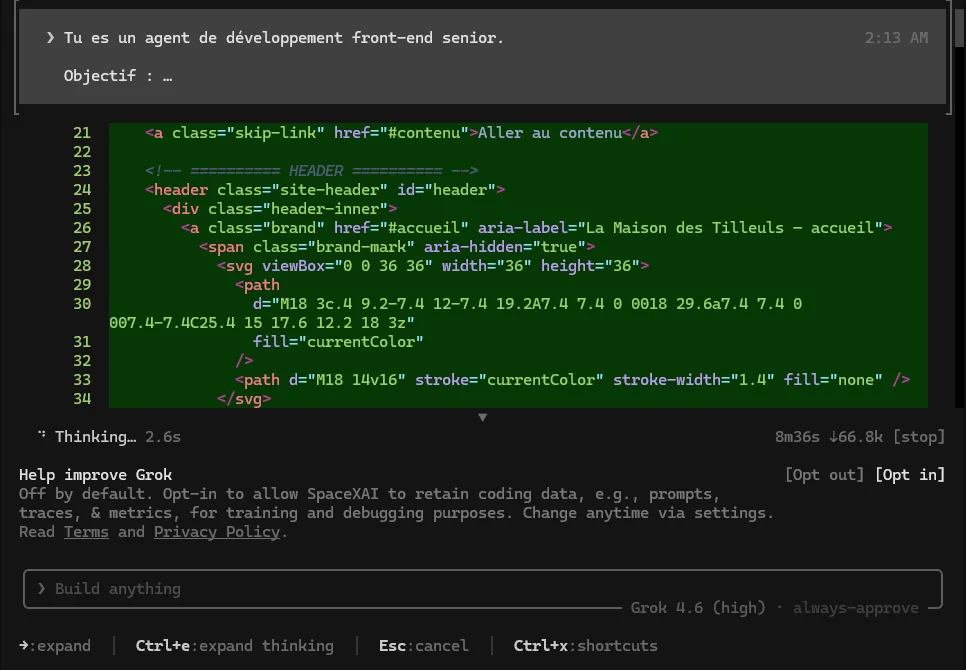
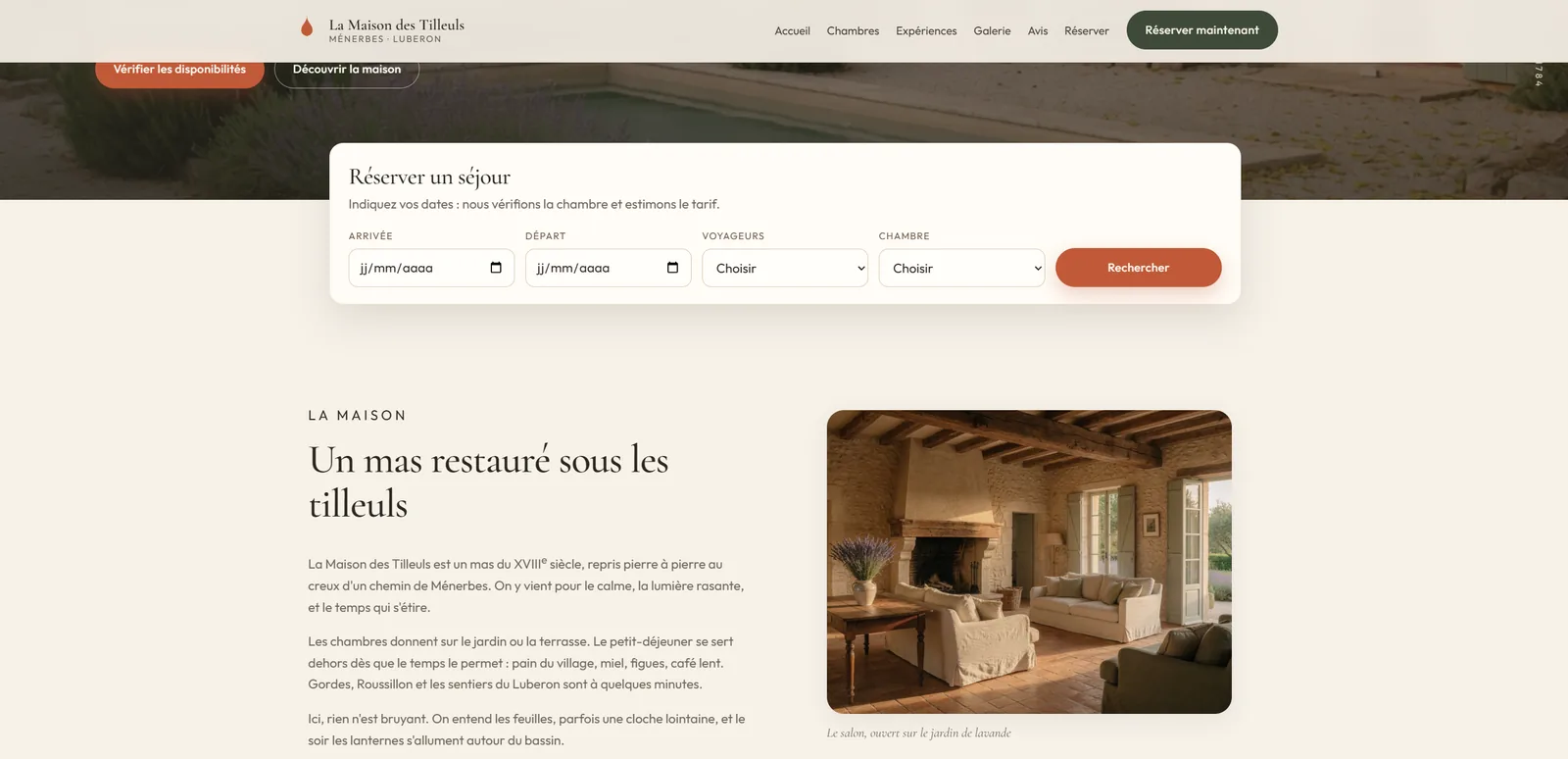
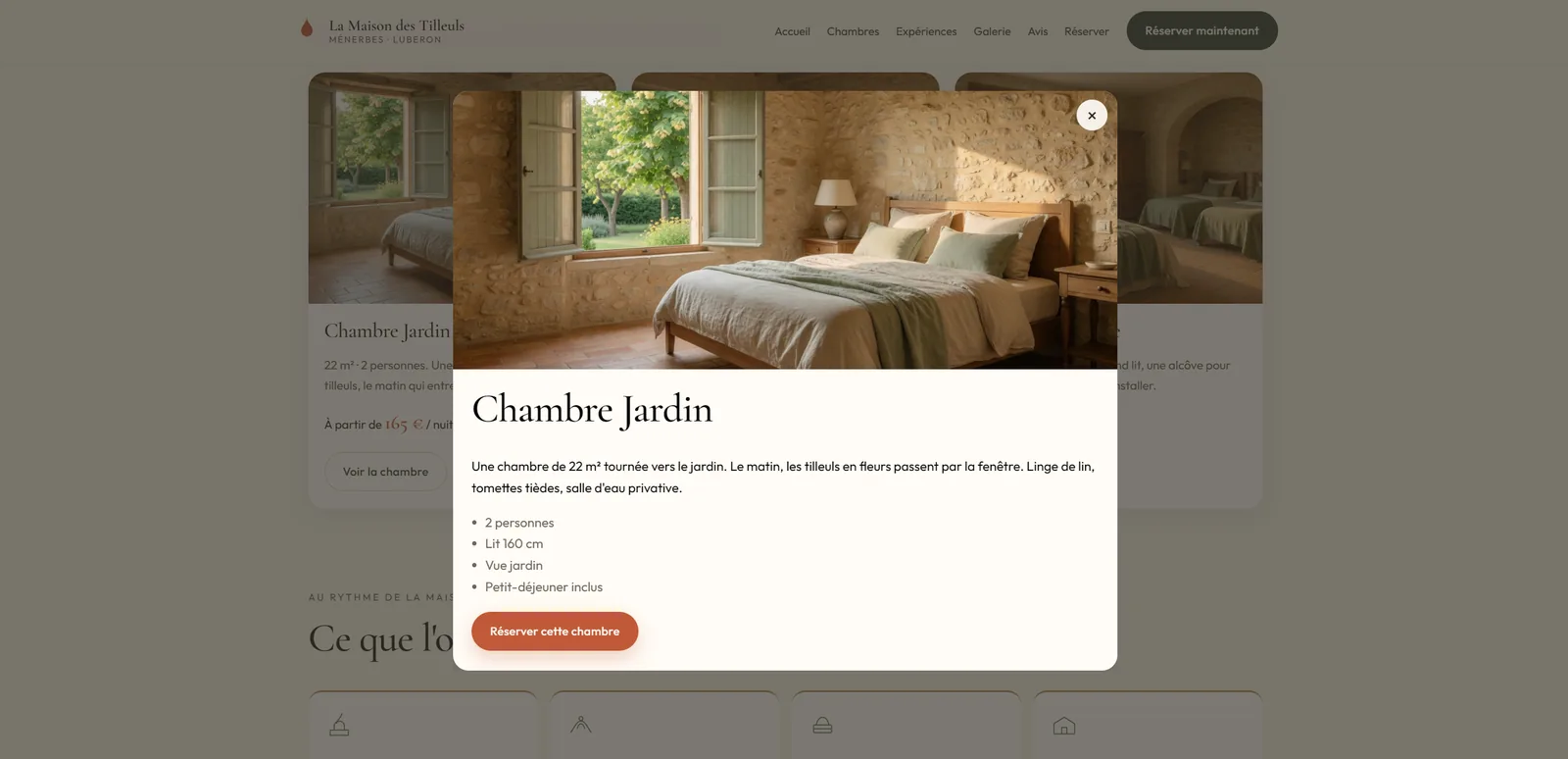
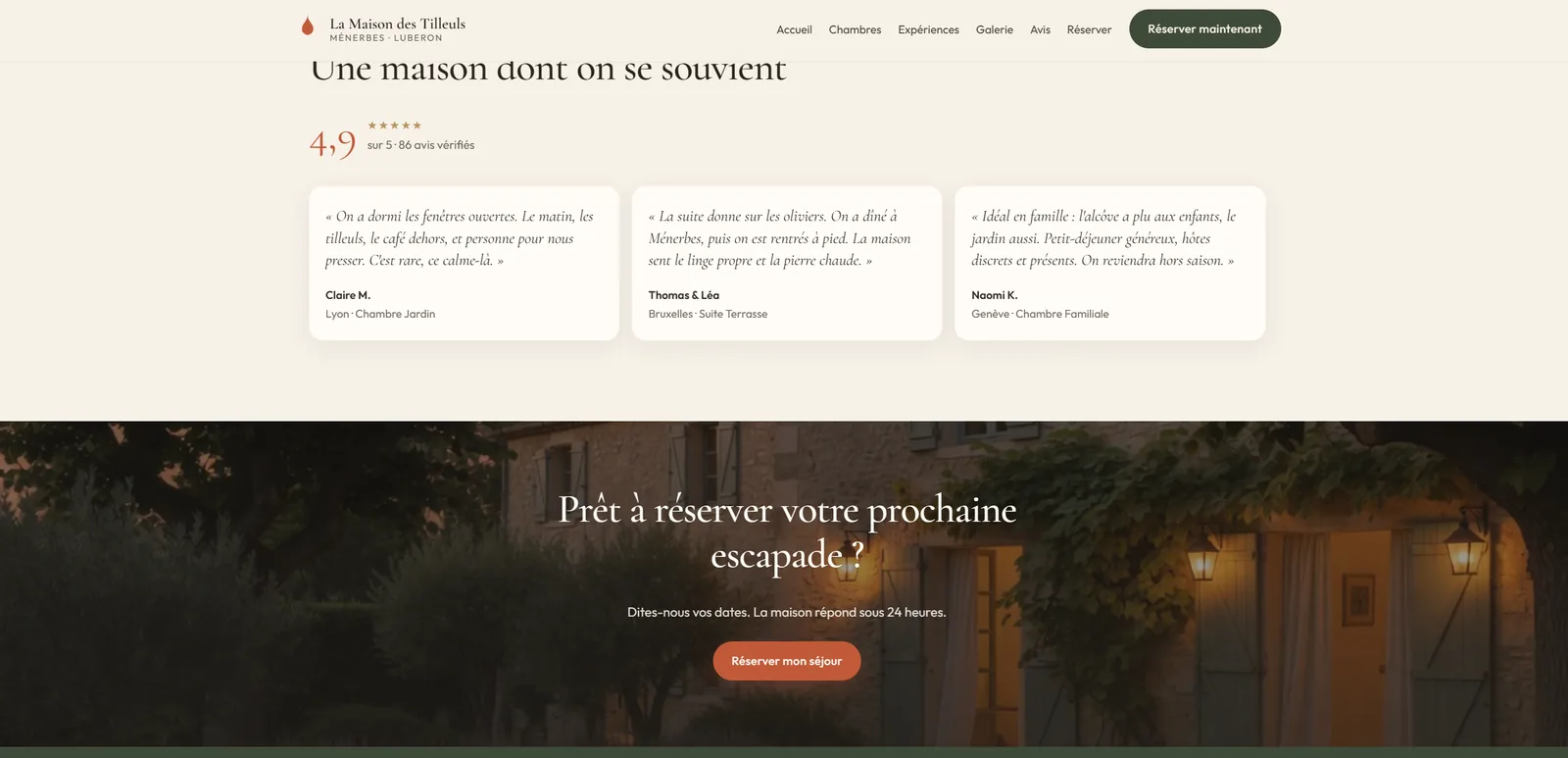
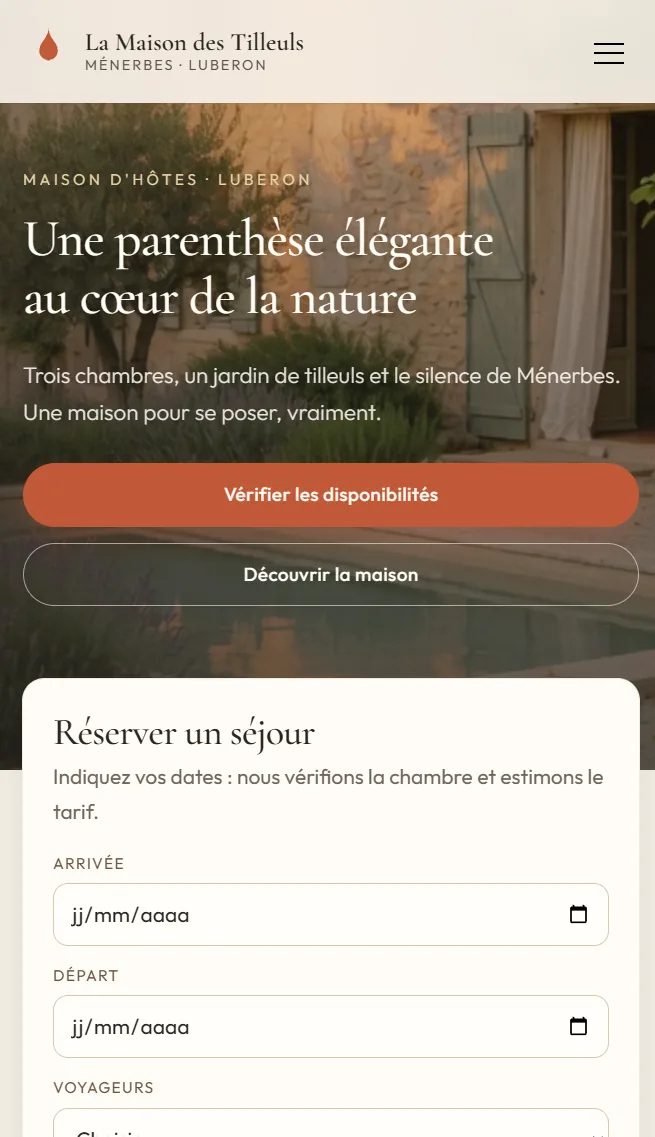
The first result is exceptionally clean. Visual direction holds from the hero to the final CTA, the booking form fits naturally into the composition, dialogs work, and mobile was designed rather than merely shrunk.
Multimodality makes a real difference. Grok generated images of the property, rooms and atmosphere alongside the code. Shared lighting and architecture make the result feel like one product from the first render.
Try the generated result
The preview below is the actual site generated during the benchmark. Property details, prices and contact information are fictional. The form only computes values in your browser and sends no data.
Direct, fluid and persistent
In this test, the experience felt fluid and snag-free. Grok stayed focused and completed the assignment. Compared with some Claude sessions, I saw fewer premature stops and fewer unnecessary detours. That is a field observation, not a universal property.
Fifteen minutes may sound slow. Yet fifteen minutes for a nearly shippable first pass beats five minutes followed by an hour of repair work. Useful speed is the time to a completed task.
The meaningful 500K-token caveat
A 500,000-token window is ample for most features, diagnostics and targeted refactors. For exhaustive monorepo analysis or very large document sets, the one-million-token windows of GPT-5.6 and Fable 5 remain more comfortable. This is a routing criterion, not a deal-breaker.
How to try Grok 4.6 for free
As explained in my guide to trying Grok 4.5 for free in Grok Build, create an xAI account, install Grok Build, then run:
grok updateRestart the CLI and select Grok 4.6 if it appears in your model picker. xAI’s pricing page currently includes Grok Build in the free plan, subject to usage limits. Grok 4.6 availability and quotas may vary by account, so check what your account displays before starting a long run.
Why developer adoption could happen quickly
Grok 4.6 does not win every benchmark, and its 500K context remains smaller than the one-million-token windows of Sol, Fable and Kimi K3. But xAI is not merely trying to win one column. It is offering a top-tier model at a price that until recently belonged to mid-range models. That combination, more than the raw leaderboard position, is what could create a paradigm shift.
The market signal is straightforward. A frontier model no longer needs frontier pricing. Anthropic and OpenAI will have to justify their premium through a visible advantage in quality, context, reliability or integration. Qwen is directly matched on price, while Kimi loses its pricing advantage. xAI is not choosing one competitor. It is putting the entire grid under pressure.
I would not migrate a team because of a leaderboard. I would immediately rerun my prompts, repositories and quality gates, then measure cost per successfully completed task. If the model confirms this first test at scale, switching to Grok will not be hype. It will be a rational technical and economic decision.
Sources
- xAI — official Grok 4.6 announcement
- xAI Docs — context, pricing and reasoning settings
- xAI Docs — Grok Build reference and update command
- Artificial Analysis — intelligence, speed and pricing
- Anthropic — Fable 5 specifications, availability and pricing
- OpenAI — GPT-5.6 Sol, Terra and Luna positioning and pricing
- OpenAI — Luna’s 80% price cut
- Alibaba Cloud — Qwen3.8-Max Preview launch
- Kimi — official Kimi K3 context and pricing
- xAI — current plans and Grok Build availability