01 — documents
Document AI agent
Connect AI to your PDFs, contracts, procedures, tickets or knowledge bases with sourced answers, access rights and logs.
From Bordeaux, I build AI agents that actually do the work: business process automation, document RAG, connection to your tools. On Azure OpenAI and Microsoft Fabric when your stack is Microsoft, on European providers or your own infrastructure when sovereignty comes first. From SMBs to large groups, with the same level of rigour.
The goal is not another demo, but automating a real process: observable, secure, measured by cost per task and genuinely integrated with your data.
Connect AI to your PDFs, contracts, procedures, tickets or knowledge bases with sourced answers, access rights and logs.
Classify, extract, route and draft: emails, forms, tickets, invoices or internal requests handled end to end, with human validation on high-stakes cases.
Help business teams query their data, understand indicators and generate actionable analysis.
Create an assistant connected to your APIs, CRM, SharePoint, SQL databases, files or business workflows with guardrails and traces.
A short discussion to identify the most valuable AI use cases: automation, document assistant, AI agent, reporting, support or request qualification.
Process mapping, ROI / complexity / risk scoring, target architecture, budget estimate and 30 / 60 / 90 day roadmap.
Useful prototype on your real data: sources, permissions, prompts, evaluation, logs, monitoring and production-readiness criteria.
Target architecture, security, CI/CD, supervision, cost per task, governance and GDPR compliance — on Azure and Microsoft Fabric, on a European provider or on your own infrastructure.
The model and where it runs are two distinct decisions. I work at all three levels and arbitrate with you based on data sensitivity, volume and the expected level of sovereignty — not on a vendor preference.
The natural choice when your information system is already Microsoft: Entra ID, Key Vault, Azure AI Search, Fabric and Power BI integration, with the compliance and support a large-group IT department expects.
Scaleway, Hostinger or another European operator to run open-weight models on servers located in the EU, with a DPA, identified sub-processors and no CLOUD Act exposure.
Your own GPUs or datacenter when data must not leave. A real entry cost, full control, and quick payback above a certain volume. It is what I run for my own agents.
Before industrializing an AI agent or automation, I prefer a short, measurable scope linked to a real business objective. The idea is simple: quickly prove whether the use case deserves to go further.
State what the MVP should improve: processing time, cost per request, answer quality, automation rate or production delay.
Set up a few readable metrics: time saved, cost per action, usage rate, sourced answers, user satisfaction and errors to fix.
A good POC should not live forever. It should help decide: industrialize, reduce scope, change model or return to a more classic automation.
My approach starts with the need, the available data and the company constraints. Only then come the model choice, the AI agent, the RAG system or the automation to implement.
The work combines AI agents, business automation, RAG, Data Cloud architecture, governance, monitoring, FinOps and team enablement. The goal is to move from an appealing POC to a tool that is actually used, measured and maintainable.
I adapt to the size of the organization: an SMB needs a short scope and a fast result, a large group needs an architecture that clears the security review, compliance, access governance and the investment committee. I have worked in both contexts, across retail, finance, healthcare, real estate, public sector and consulting environments.
I test what I recommend and publish the measurements. Two examples: what an AI agent task really costs, and my private two-agent self-hosted architecture.
From Bordeaux, I support companies of all sizes in Bordeaux, Mérignac, Pessac, Talence, Bègles, Eysines, Bruges, Le Bouscat, Gironde and across France remotely.
The budget depends on the level of support: framing session, AI audit, AI agent/RAG MVP or Azure industrialization. The right first step is to prioritize use cases by ROI, complexity, risk and ability to measure results.
A chatbot answers questions. An AI agent can use tools, read sources, trigger actions, follow a workflow and produce usable traces.
Yes, with a document RAG architecture: indexing, semantic search, sourced answers, access rights management, logs and supervision.
Both, deliberately. Azure OpenAI, Microsoft Fabric, Azure AI Search, Entra ID and Key Vault fit naturally when your information system is already Microsoft, and that is often the right call in a large group. When sovereignty or cost comes first, I deploy open-weight models on a European provider such as Scaleway or Hostinger, or directly on your infrastructure. The model and where it runs are two separate decisions.
Yes. Open-weight models run on GPUs operated inside the European Union — Scaleway and Hostinger both offer this — or on your own infrastructure, with a DPA, identified sub-processors and no CLOUD Act exposure. The price is paid in infrastructure work rather than an API key. It is a trade-off to state explicitly, with the DPO as much as with the engineering team.
In practice: handling inbound requests, extracting and normalising data, classifying and routing tickets, reading documents or logs, drafting replies and follow-ups. The rule I apply is to route by cost of error: a routine step goes to a cheap model, a high-stakes decision stays on a frontier model or with a human.
Both. An SMB expects a short scope and a fast result; a large group expects an architecture that clears the security review, compliance, access governance and the investment committee. I adapt the method and deliverables to the context, with 9 years of experience in Data, Cloud and BI across retail, finance, healthcare, real estate, public sector and consulting environments.
Yes. From Bordeaux, I support companies of all sizes in Bordeaux, Mérignac, Pessac, Talence, Bègles, Eysines, Bruges, Le Bouscat, Gironde and across France remotely.
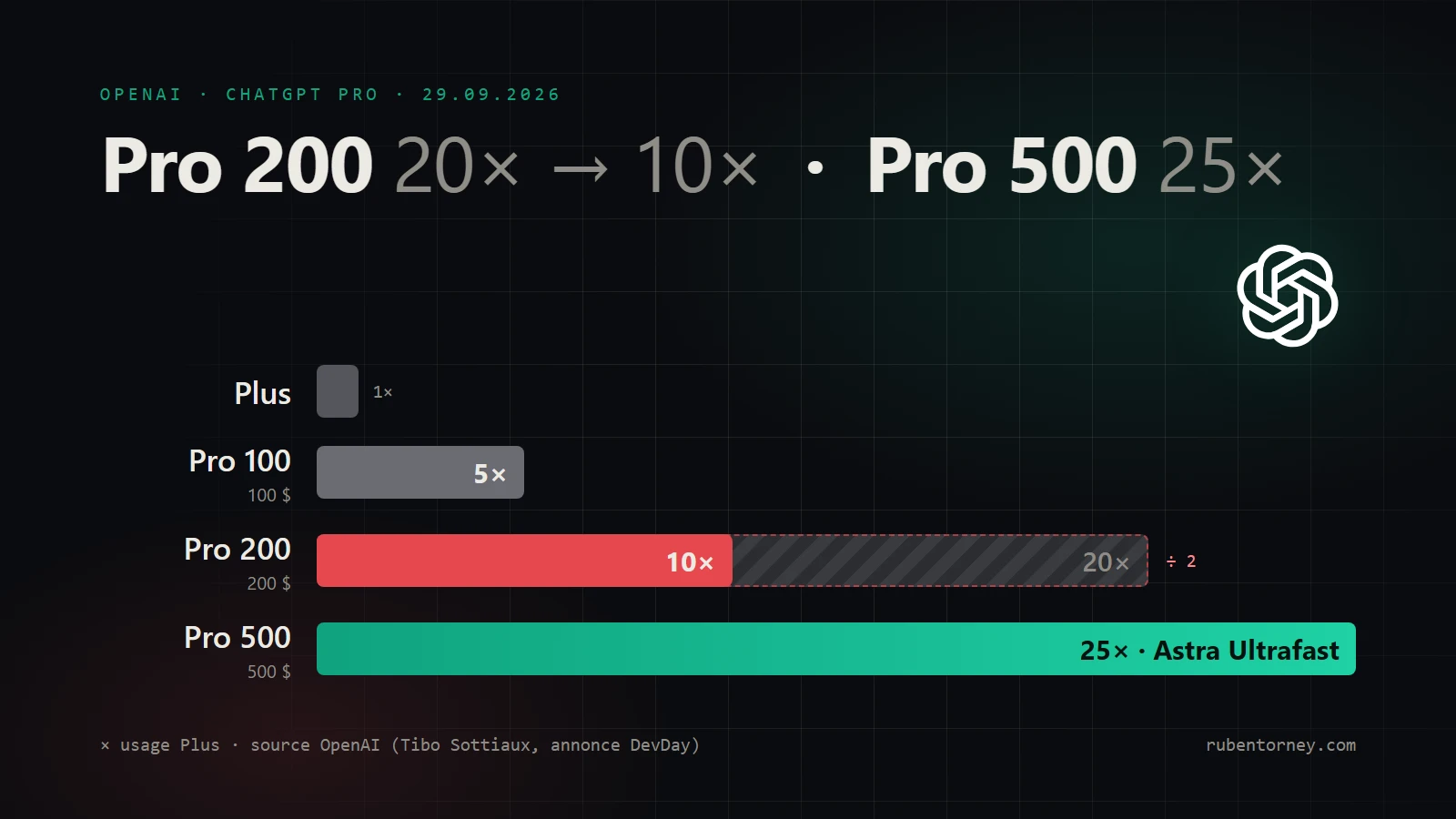
OpenAI reopens Pro 200 with half the included usage and adds a Pro 500. After the September 10 freeze, the end of the open bar is getting closer.
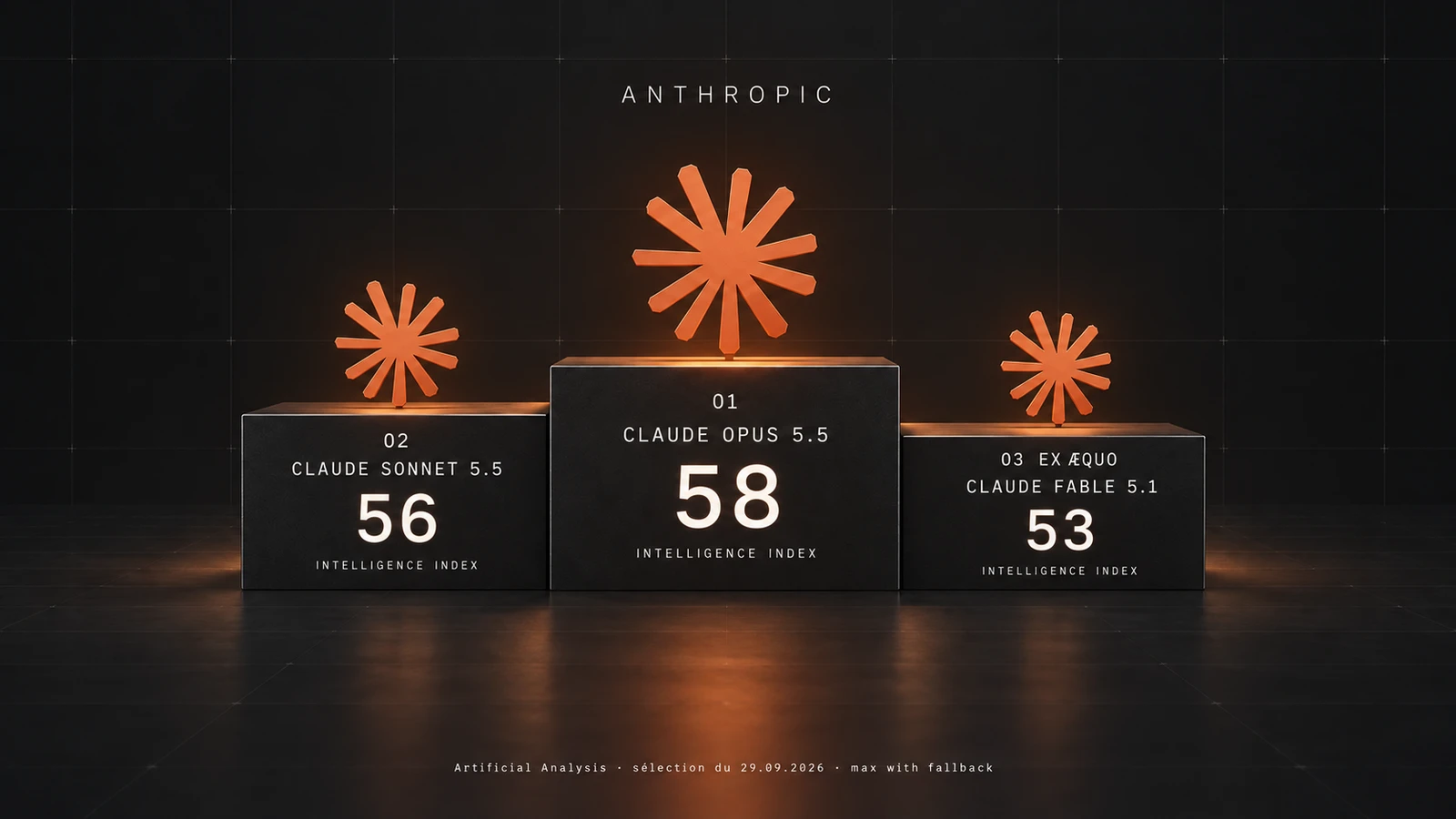
Opus 5.5 now leads the Intelligence Index. How to claim up to $250 in cloud credits by October 7, my measured test and Anthropic’s IPO.
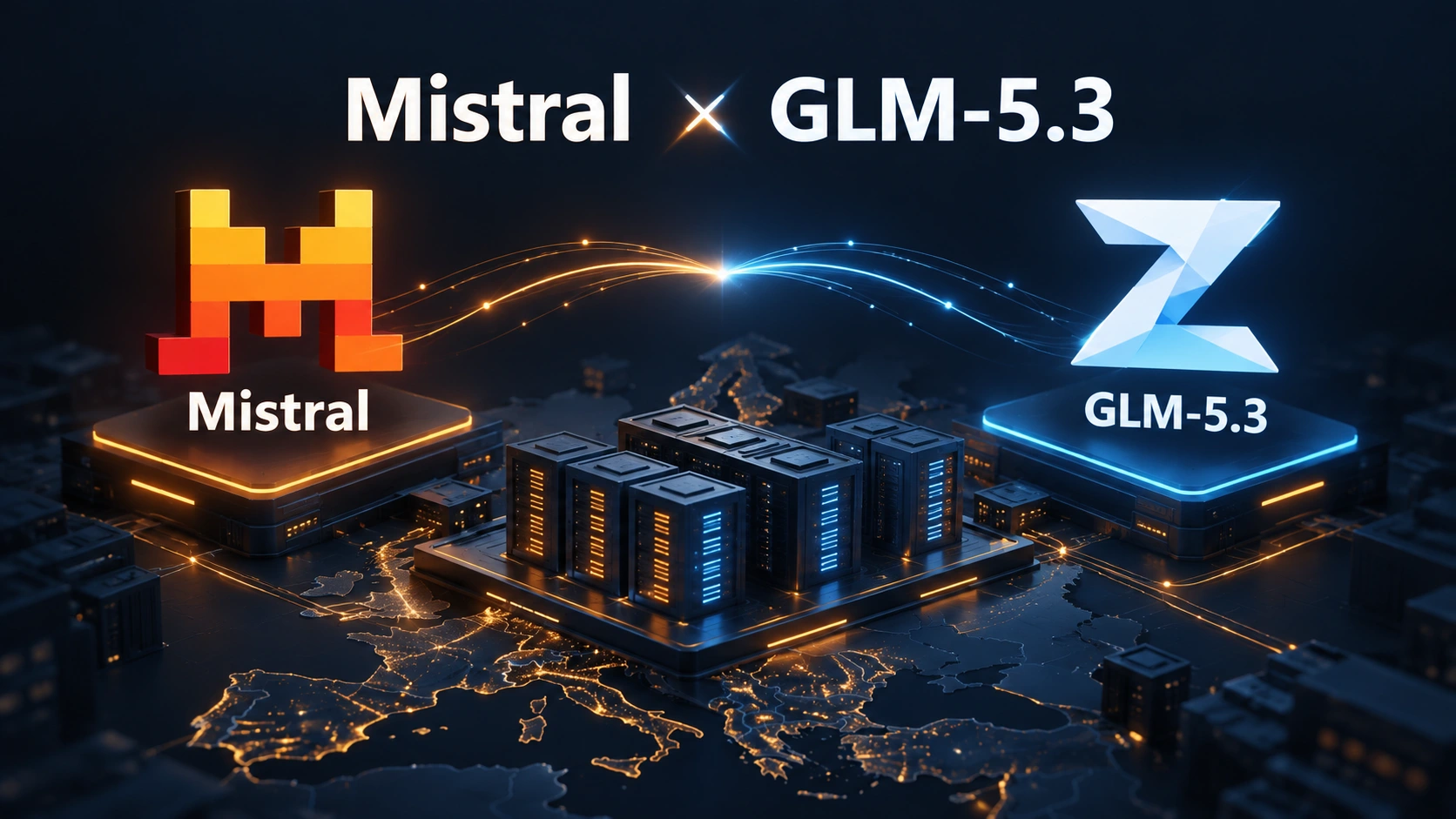
GLM‑5.3 on Mistral, Artificial Analysis scores, the AI Act, costs and guardrails. My view of Europe’s bet on hosting Chinese open-weight models.
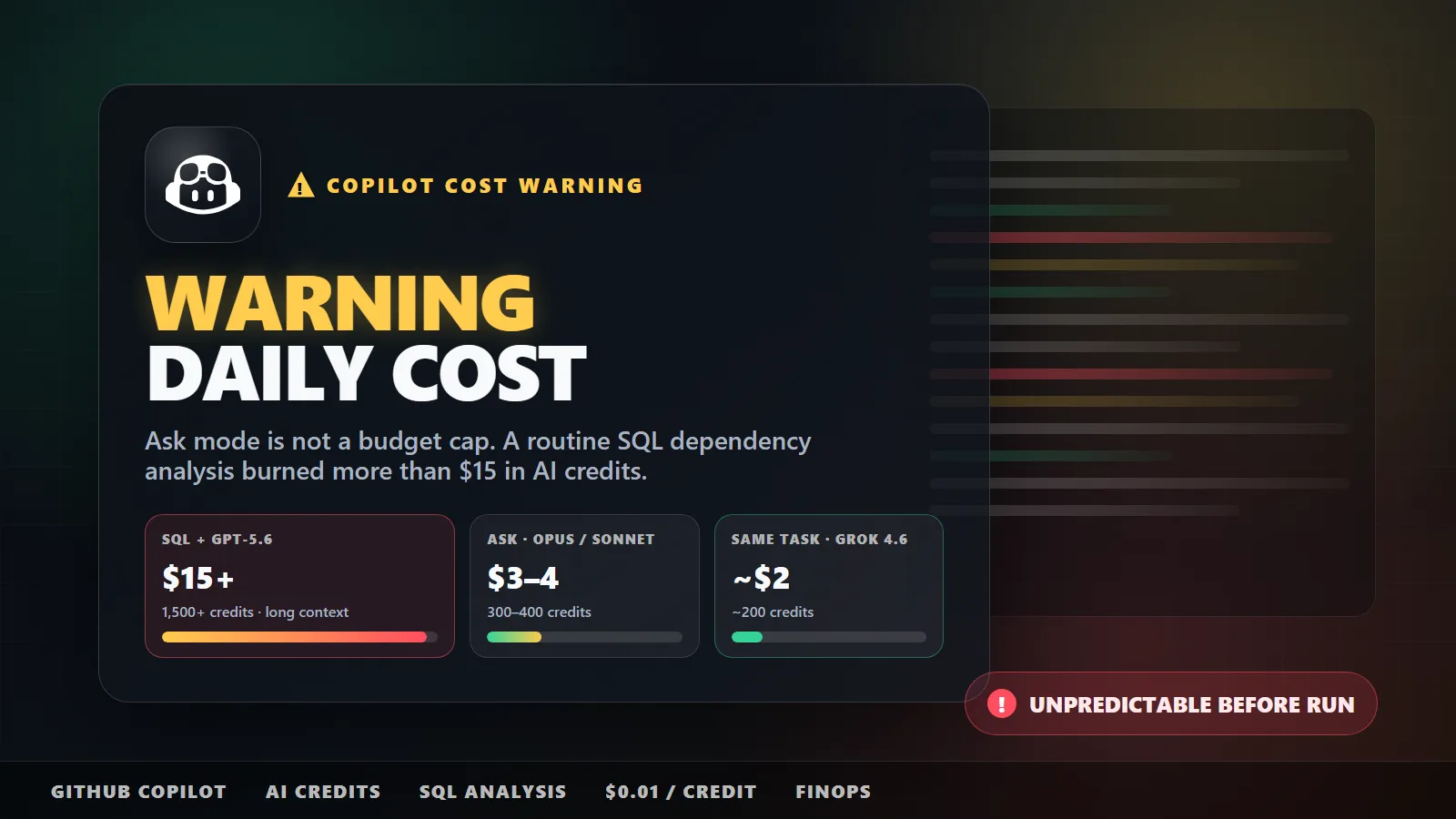
Three months after the open bar ended, a routine SQL analysis burned more than $15 in credits. Ask mode is not a budget cap.
We can start simply: 30 minutes to understand your context, data, constraints and AI use cases that are really worth the effort, with a first view of measurable objectives.
Book an AI audit